Delta T: the number that decides your energy bill.
Delta T (ΔT) is the temperature difference between the water going into a piece of equipment and the water coming out. When it is lower than designed, your building moves far more water than it needs — and pays for it every hour.
What is delta T?
Supply in, return out.
In a chilled-water system, water typically leaves the chiller at about 6°C and should come back at about 12°C — a delta T of 6°C. That difference is how much heat each litre of water carries away from your building.
If the water comes back at only 9°C, delta T has halved. To move the same amount of heat, the system must pump roughly twice as much water. This is known as low delta T syndrome.
SUPPLY
6°C
RETURN
12°C
ΔT
6°C
Where it goes wrong
Every unit in the loop affects delta T.
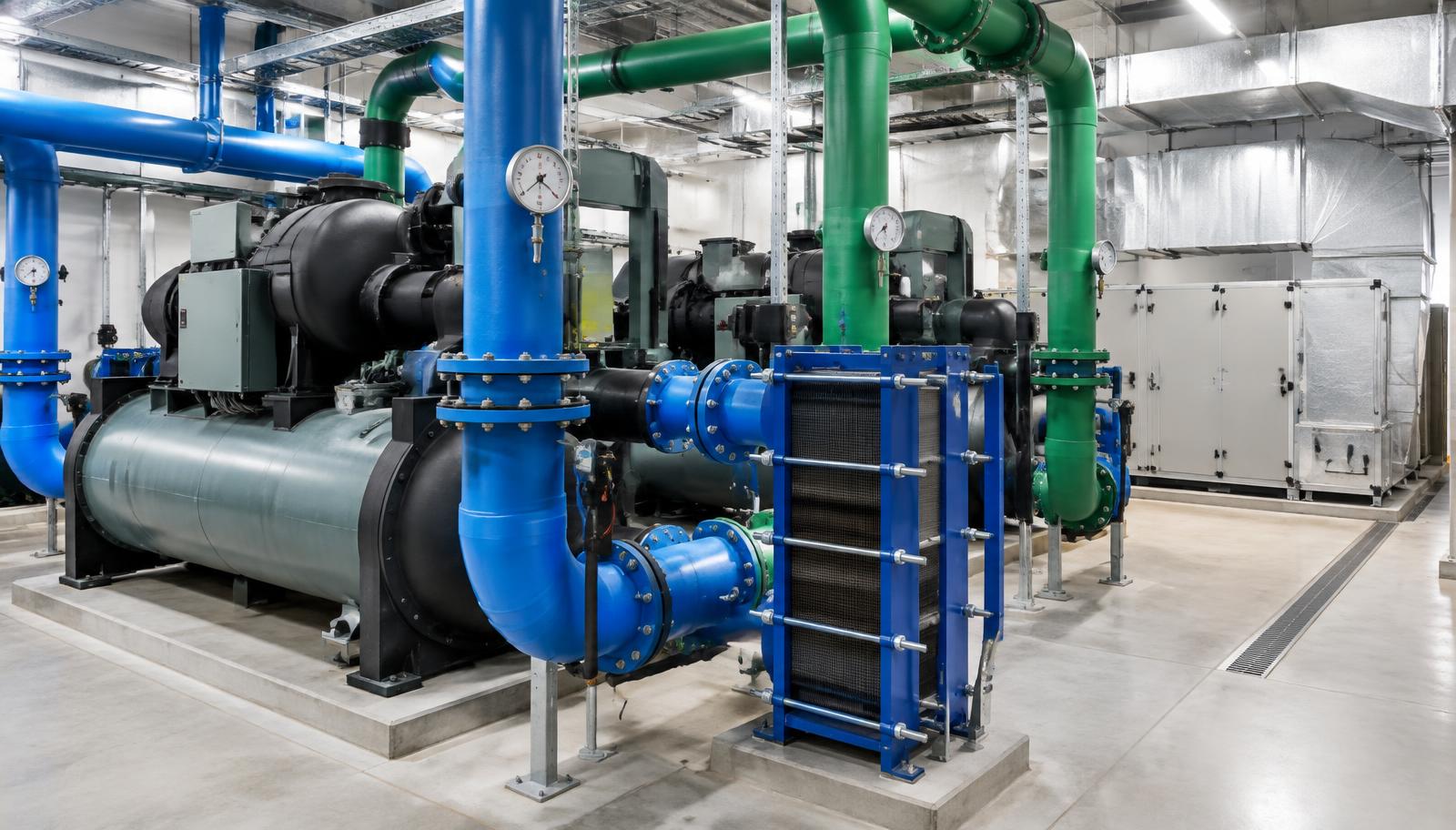
Chillers
Design ΔT ≈ 5.5°C (6 → 12°C)
When chilled water returns too cold, the chiller runs part-loaded and inefficiently. Extra chillers and pumps get switched on to meet the same load, wasting electricity and wearing out plant early.
AHUs — Air Handling Units
Coil ΔT drives capacity
Dirty coils, wrong valve selection or open bypasses let water pass through without picking up heat. The AHU demands more flow, the room still feels warm, and humidity control suffers.
FAHUs — Fresh Air Handling Units
Highest coil load in the building
FAHUs treat hot, humid outside air. Low delta T here means poor dehumidification, damp and mould risk, and a big share of chiller energy wasted.
FCUs — Fan Coil Units
Hundreds of small leaks of energy
Uncontrolled or always-open FCU valves in empty rooms send cold water straight back to the plant, dragging down return temperature across the whole system.
PHEs — Plate Heat Exchangers
Approach temperature matters
Fouled or wrongly balanced PHEs lose heat-transfer performance, so both sides of the exchanger carry more water than needed and the secondary system starves.
The cost
How poor delta T costs you money.
Our energy audits measure delta T at each chiller, AHU, FAHU, FCU and PHE, find the causes — fouled coils, faulty valves, bypasses, poor balancing — and set out the fixes, such as PICVs, DRVs and coil cleaning.
Book a delta T auditHigher pumping costs
Pump power rises roughly with the cube of flow — 20% more flow can mean around 70% more pump energy.
Wasted chiller energy
Extra chillers run at low load, where they are least efficient.
Comfort complaints
Rooms at the end of the system run short of cooling despite the plant working flat out.
Shorter equipment life
More running hours and cycling on chillers, pumps and valves.
Capacity you can't use
The plant looks 'full' while installed chiller capacity sits idle.